Libra: a planning companion
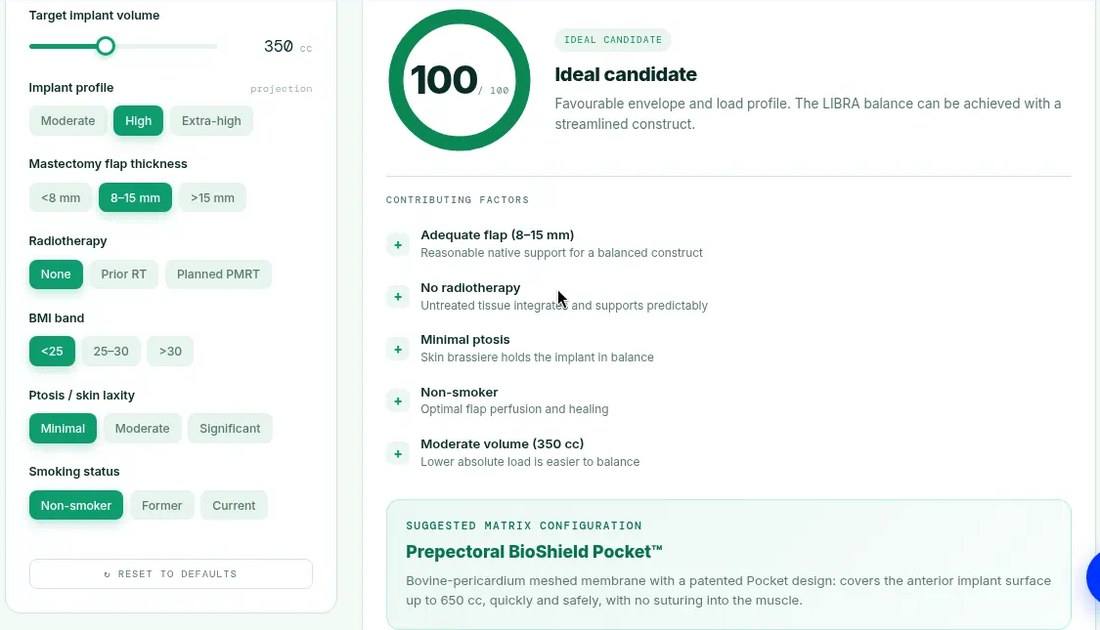
Candidacy first. Balance, protocol and evidence next.
Lightweight Integrated Bioregenerative Approach. B-Lite with a Prepectoral BioShield Pocket, as a planning companion for candidacy, load, protocol and evidence.
Designed and built by me with AI for Advanced Biomedical Concept. Concept, Prof. Roy De Vita. 2026, work in progress.
Problem
Prepectoral reconstruction asks for candidacy, load and sequence in one place. A document you scroll is not a plan you can run.
Craft
Who it is for
ABC's team, representatives and healthcare professionals planning prepectoral cases with B-Lite and the BioShield pocket. Restricted access. Marked work in progress.
Candidacy
Build a suitability index from clinical inputs. Change a slider and the score updates. A first pass before you talk load.
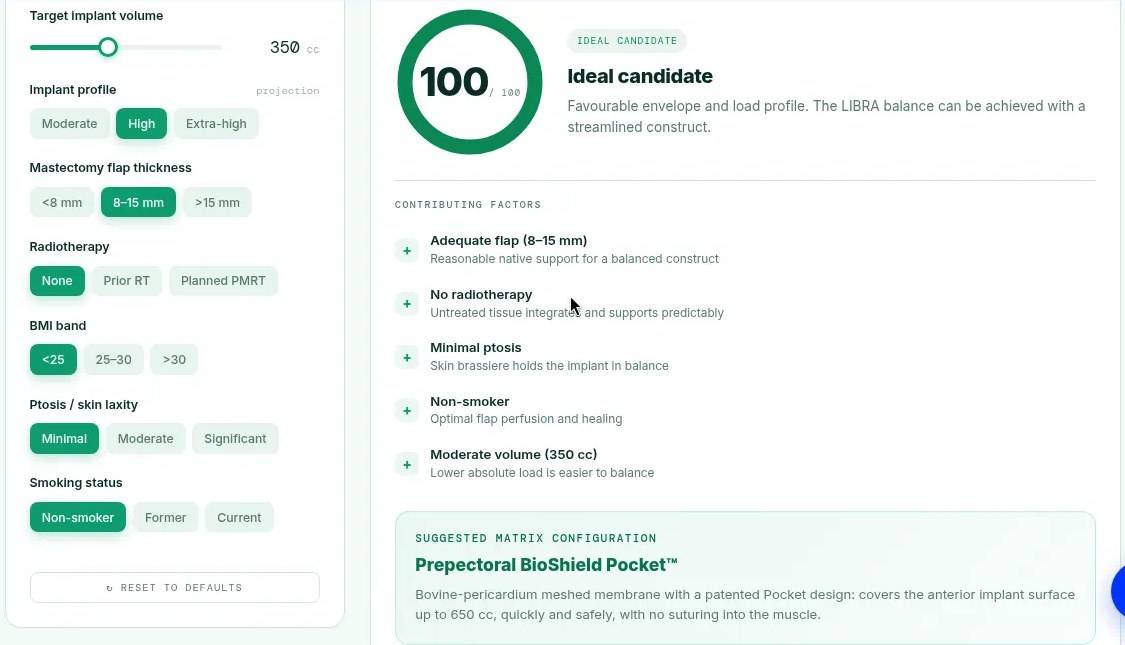
Step 1. Is this patient a candidate? Balance Simulator
Load against support with B-Lite and the BioShield pocket. See how configuration choices shift the balance before you lock a plan.
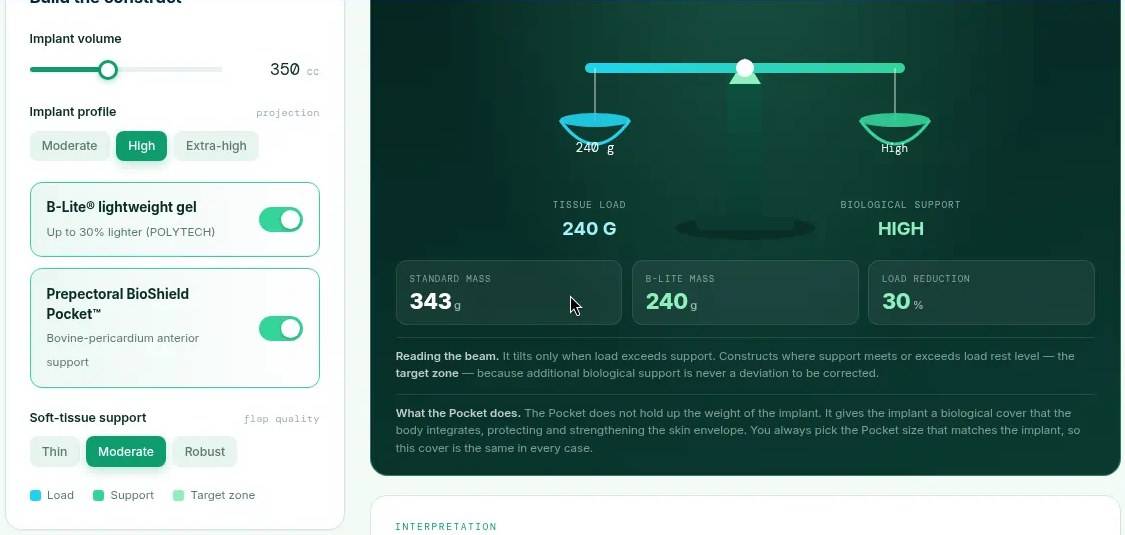
Step 2. Load versus support. Protocol Sequence
Seven phases in order. A planning companion you step through, not a PDF you scroll.
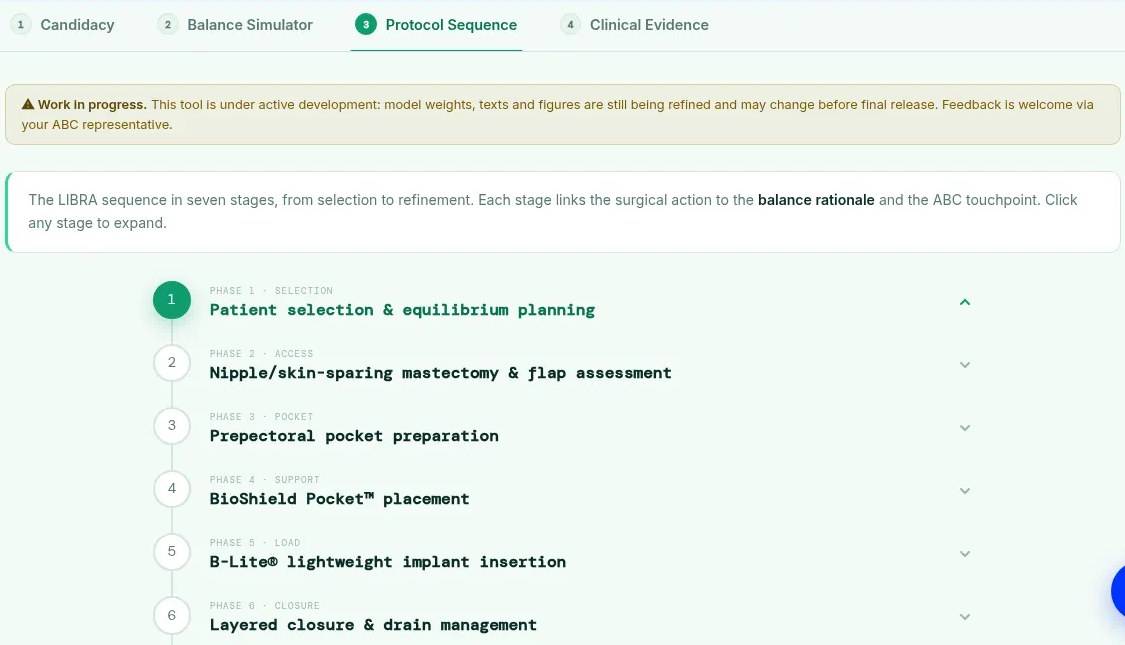
Step 3. The sequence, phase by phase. Clinical Evidence
Studies in the same screen as the plan. Heuristic, not a validated predictor. Labelled work in progress on purpose.
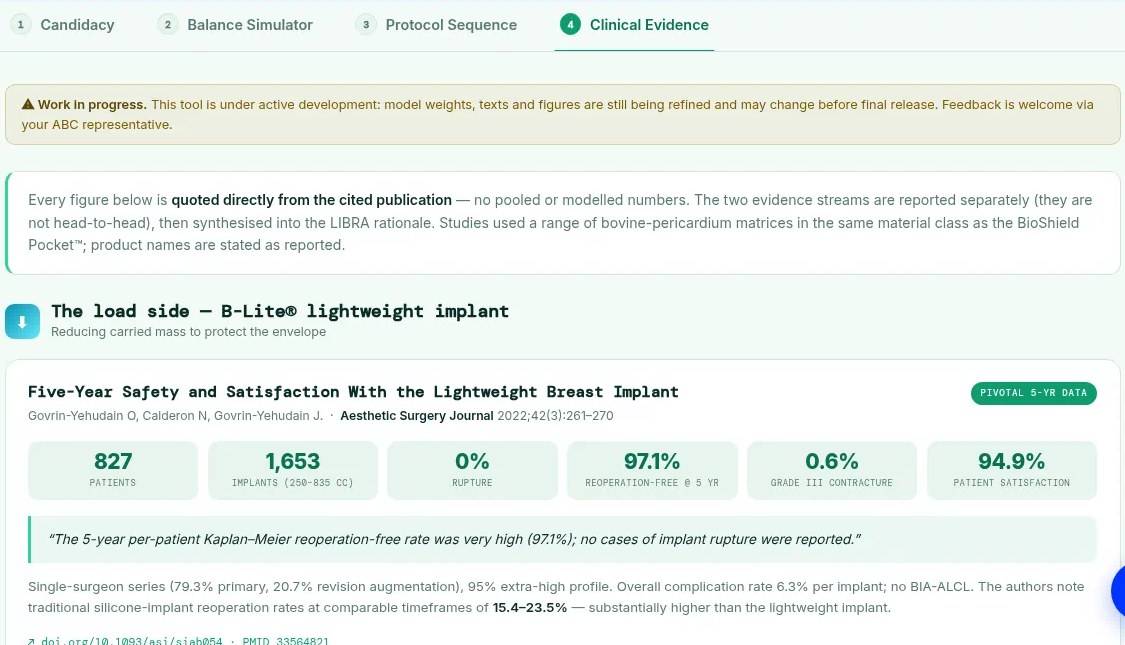
Step 4. Evidence beside the protocol. Why shipping it matters
A draft protocol becomes a working page while the science is still moving. Design and code sit with me, AI does the heavy lifting on the build, and the tool can change as fast as the protocol does.
Candidacy through to evidence.
Outcome
Live behind HCP access, listed among the site's tools, still labelled work in progress. Concept by Prof. Roy De Vita.